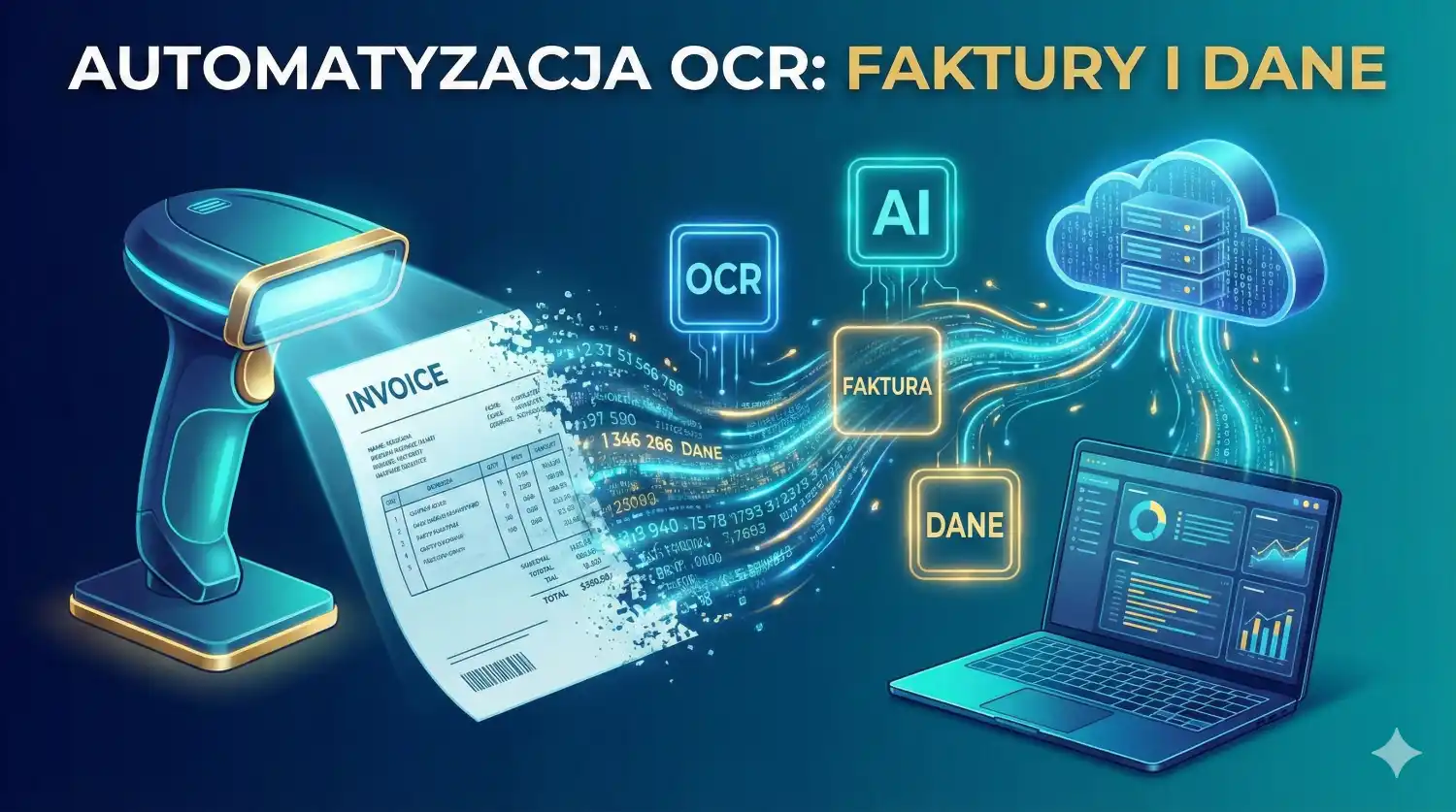
Poland’s National e-Invoice System (KSeF) is changing the accounting software market. Structured electronic invoices remove the need to scan many domestic B2B invoices, but they do not make OCR and AI document processing obsolete.
What KSeF actually changes
KSeF replaces OCR for invoices issued between Polish businesses when the document is already available as structured machine-readable data. However, it covers only part of the financial-document workflow.
Foreign supplier invoices, travel documents, receipts, technical attachments, acceptance protocols and historical archives still arrive as PDFs, scans or paper. Companies importing goods and services may therefore continue to process a meaningful share of their documents outside KSeF.
Where OCR still creates value
- Foreign invoices: documents from suppliers outside Poland still need to be extracted and entered into ERP or accounting systems.
- Travel and expense documents: airline tickets, toll receipts and employee expenses remain unstructured.
- Invoice attachments: specifications, contracts, protocols and cost calculations are processed outside the structured KSeF payload.
- Historical archives: companies still need to digitise and search older paper documentation.
A shift away from oversized enterprise platforms
If most domestic invoices arrive in a structured format, an expensive enterprise OCR platform designed for tens of thousands of monthly documents may no longer be economical. Many companies will instead need a smaller module for the remaining exceptions.
This opens space for modular on-premises or hybrid solutions: easier to deploy, simpler to integrate and capable of keeping sensitive data under the company’s control. Local open-source models can complement cloud APIs where infrastructure and compliance requirements justify it.
The Wise OCR approach
I built Wise OCR around this narrower, practical need. Instead of creating another large SaaS platform, the architecture can be deployed inside an organisation and integrated with its existing KSeF and document workflows.
The system combines machine-learning document parsing with local or cloud language models for data extraction. It can operate without sending documents to an external AI API, depending on the selected infrastructure and accuracy requirements.
The design prioritises straightforward deployment, verification and low operating costs over a long list of rarely used features.
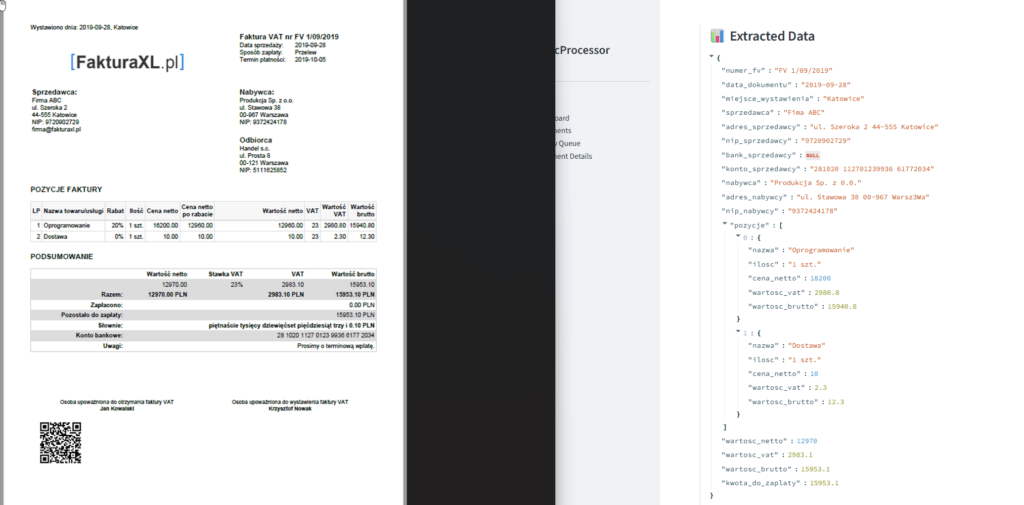
Invoice extraction example
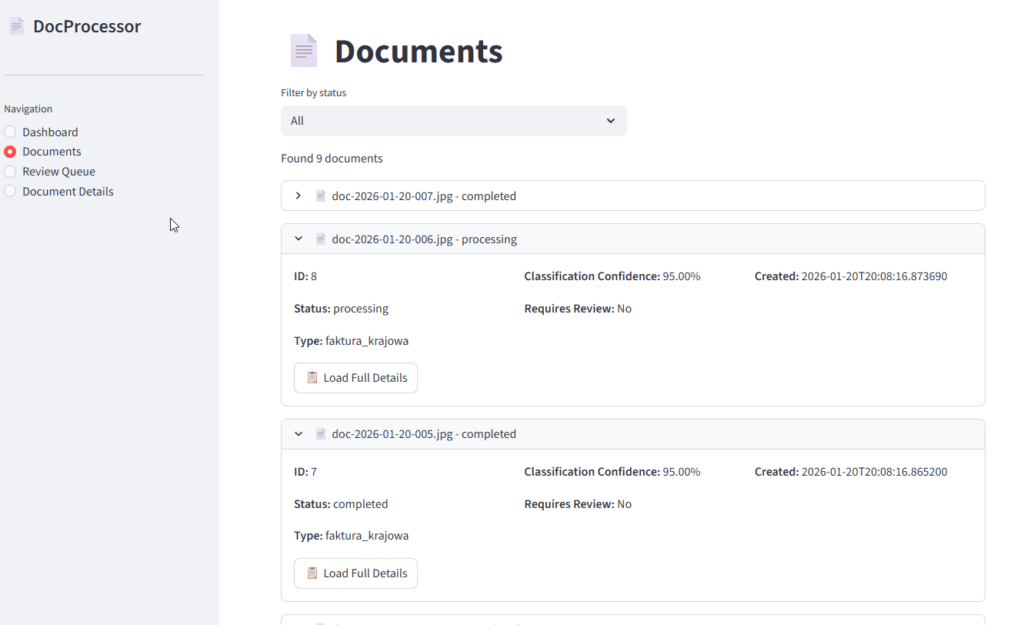
Document queue
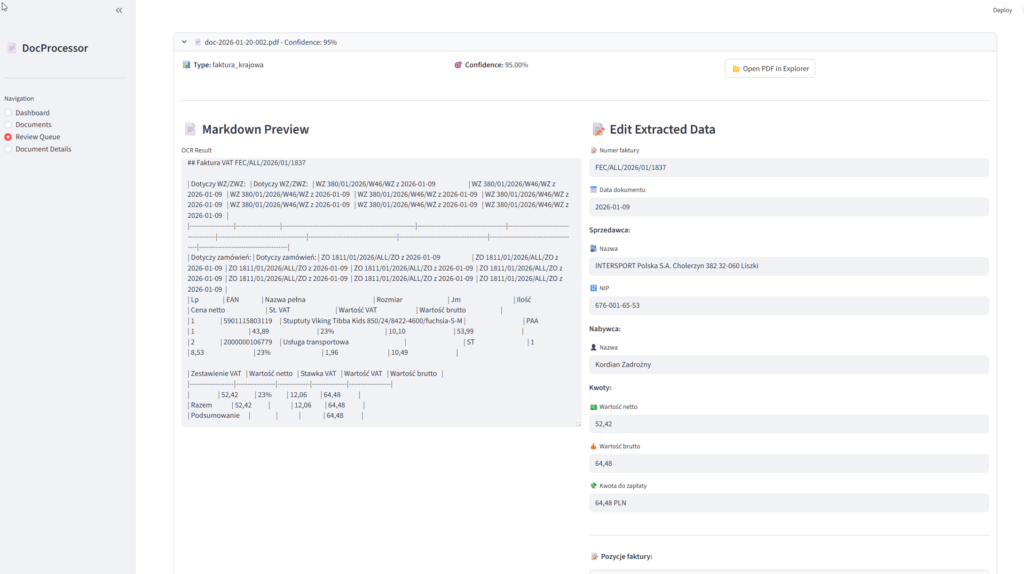
Verification with the original document preview
If your organisation needs a focused document-processing workflow, I can adapt and deploy a similar solution around its existing systems and security requirements.